
Slate Roofing
Slate roofing is not the kind of roof system you guess your way through. It is heavy, detailed, long-lasting, and unforgiving when installed or repaired incorrectly. A single cracked tile, poor flashing detail, or weak fastener can cause water problems that are not always visible from the ground. As such, it needs careful inspection, proper handling, and a clear understanding of how slate tiles, flashing, underlayment, drainage, and roof structure work together.
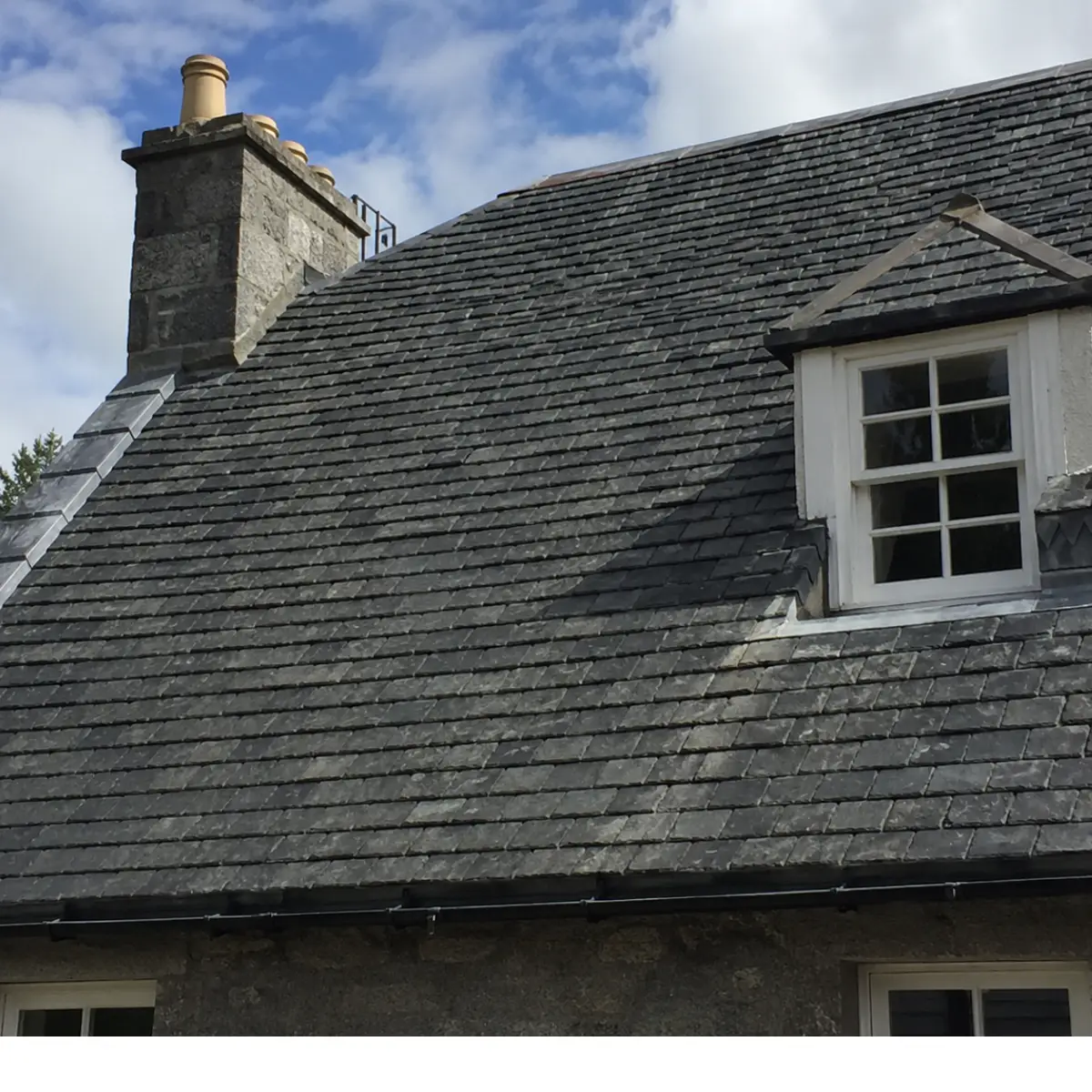
Charlotte’s Best Roofing and Gutters provides slate roofing services for property owners in the Charlotte area. Whether your slate roof needs inspection, repair, maintenance, or replacement, our team can properly evaluate the roof and clearly explain the next steps.
Slate Roofing Services
Slate roofing can last for decades, but only when the entire roof system performs as it should. The slate tiles matter, but so do the details underneath and around them. Flashing, valleys, fasteners, roof edges, chimneys, vents, and drainage points all affect how well the roof protects the property.
When we inspect a slate roof, we are not only looking for broken tiles. We are looking for the reason the problem happened and whether the surrounding areas are still sound. That helps you avoid patchwork repairs that only hide the issue for a short time.
Slate Roof Inspection
A slate roof inspection helps determine the true condition of the roof before repair or replacement decisions are made. From the ground, many slate roofs look better than they actually are, since cracked tiles, slipped slates, worn fasteners, flashing gaps, and water intrusion can be hard to see without a closer inspection.
During an inspection, Charlotte’s Best Roofing and Gutters checks the areas most likely to fail, including tiles, valleys, flashing, ridges, roof edges, penetrations, and transition points. We also look for signs that water may already have seeped beneath the slate.
This matters because not every slate roof problem requires replacement. Some issues can be corrected with targeted repair. Others may point to wider failure in the roof system. A proper inspection helps separate minor repair needs from larger roofing concerns.
Slate Roof Maintenance
Slate roof maintenance is about preserving the roof before small issues become expensive repairs. The goal is not to change the appearance of the roof. The goal is to keep the system watertight, secure, and able to shed water correctly.
Because slate tiles can last a long time, property owners sometimes assume the entire roof system is maintenance-free. That is not always true. The slate may still be strong while the flashing, fasteners, or underlayment are aging. Routine evaluation helps catch those problems before they reach the decking or interior.
Slate Roof Repair
Slate roof repair requires care because the tiles can crack when handled incorrectly. A rushed repair can damage surrounding slate, create uneven water flow, or leave the roof vulnerable to future leaks.
Charlotte’s Best Roofing and Gutters repairs slate roof issues, including cracked tiles, missing slate, slipped pieces, roof leaks, storm damage, and flashing problems. The goal is to fix the damaged area without disturbing more of the roof than necessary.
A good slate repair should do three things: match the existing roof as closely as possible, restore proper water protection, and avoid creating new weak points.
Slate Roof Replacement
Slate roof replacement may be needed when the roof has widespread damage, repeated leaks, poor installation, failing materials, or structural concerns. It may also become necessary when too many individual repairs no longer make sense.
Before recommending replacement, we’ll evaluate the full roof system. Slate is a premium material, and full replacement should not be treated as the automatic answer. If repair is still practical, that should be part of the conversation. When replacement is the right choice, the roof structure, slate type, flashing details, underlayment, slope, drainage, and installation method must all be considered.
Benefits of Slate Roofing
Slate roofing is often chosen for properties where long-term performance and appearance both matter. It has a distinct look, high durability, and a lifespan that can exceed that of many other roofing materials when installed and maintained correctly.
Long Lifespan
One of the main reasons property owners choose slate is longevity. A well-installed slate roof can last for between 75 and 100 years. That does not mean the roof can be ignored. Flashing, fasteners, underlayment, and drainage details still need attention. The slate itself may be durable, but the entire system must be maintained to protect the property.
Distinct Appearance
Slate has a natural appearance that manufactured roofing materials often try to imitate. Each tile can have slight differences in color, texture, and surface. That gives the roof depth and character instead of a flat, uniform look.
For custom homes, historic properties, and higher-end residences, slate can add architectural value. It can make the roof feel like part of the property’s design rather than just a protective covering.
Strong Weather Performance
Slate performs well in many weather conditions when the roof is properly built. The tiles are naturally strong and can resist moisture, fire, and temperature changes better than many common materials.
Long-Term Value
Slate usually costs more upfront than many roofing materials. For the right property, the value comes from its lifespan, durability, and premium appearance. A slate roof may not be the right fit for every home, but it can be a strong long-term option when the structure can support it, and the installation is handled properly. We can help you understand whether slate makes sense for their roof.
Slate Roof Design and Style Options
Slate roofs can look very different depending on the type of slate, tile size, color, thickness, and installation pattern. Choosing the right style matters because the roof becomes a major part of the property’s exterior.
The right slate roof should work with the home’s architecture, structure, budget, and surrounding materials. Brick, stone, siding, trim, gutters, and exterior colors all affect how the finished roof will look.
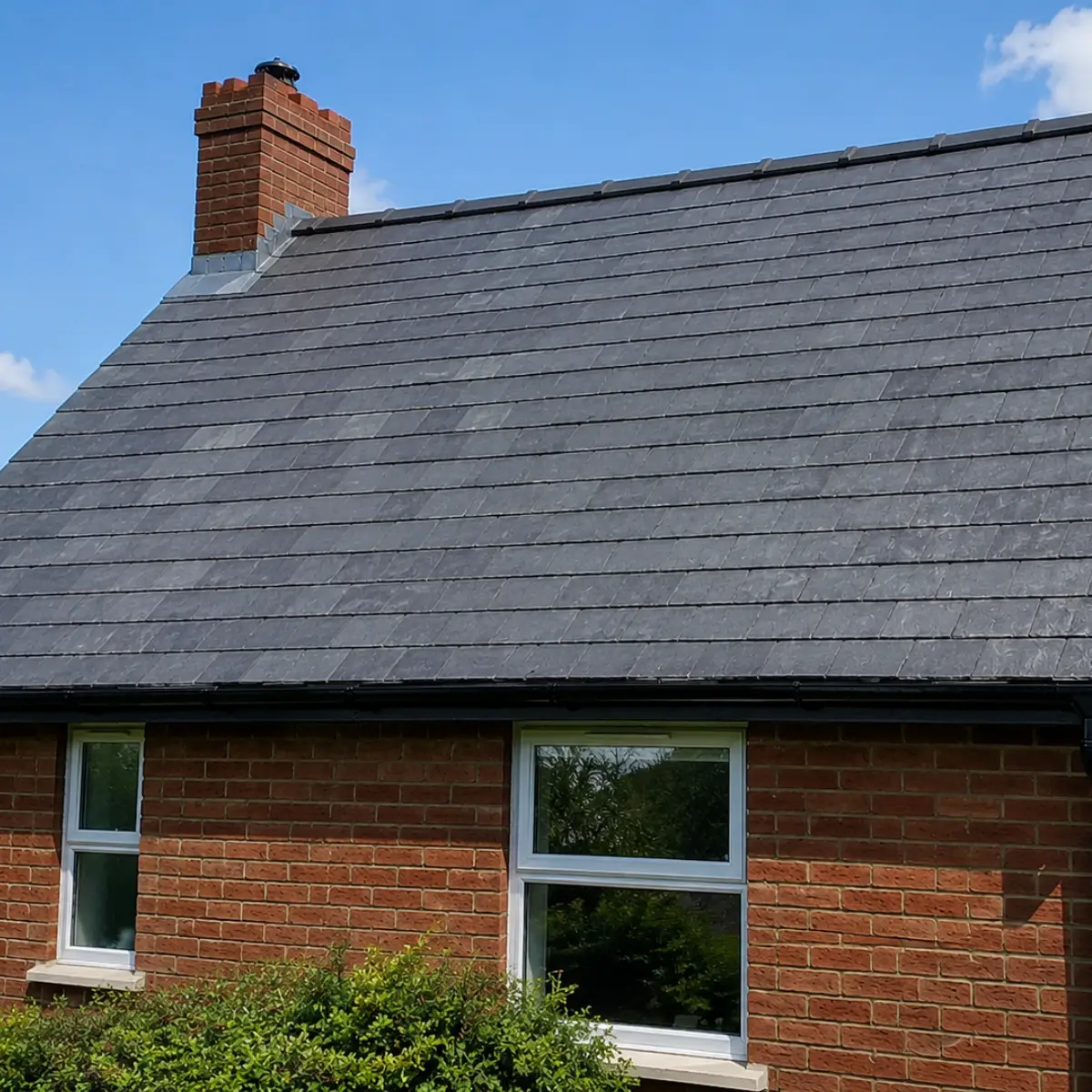
Standard Slate Roof
A standard slate roof has a clean and consistent appearance. The tiles are usually similar in size, thickness, and color, creating a more uniform roof surface.
This style works well for property owners who want the durability and natural quality of slate without a highly varied appearance. It offers a classic look while still providing the long-term performance that slate is known for.
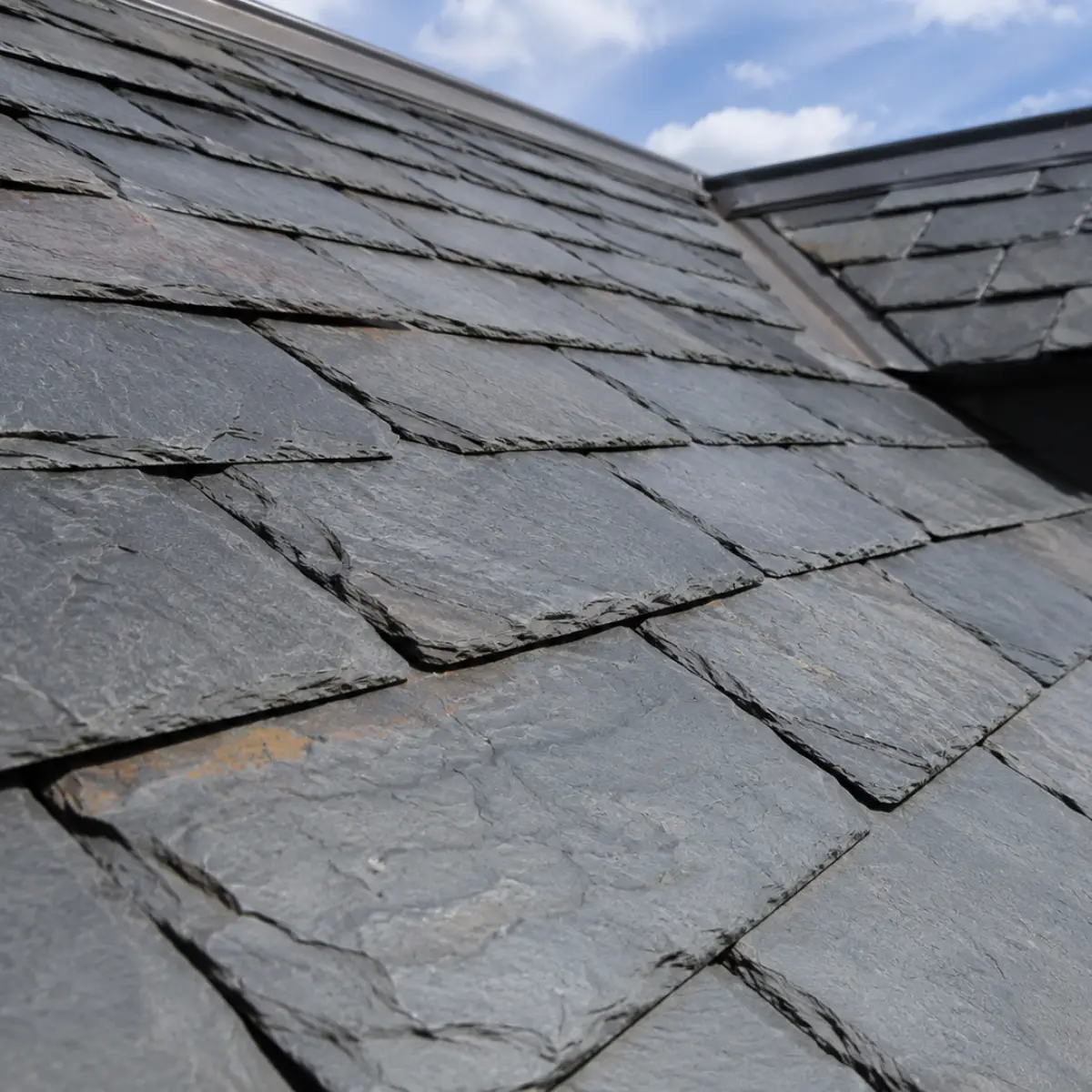
Textural Slate Roof
A textural slate roof uses tiles with more variation in thickness, size, or surface. This gives the roof more depth and a handcrafted appearance.
This style can work especially well on traditional, historic, or custom homes. The installation must be handled carefully, though, because the roof still needs to shed water correctly even with the added texture.
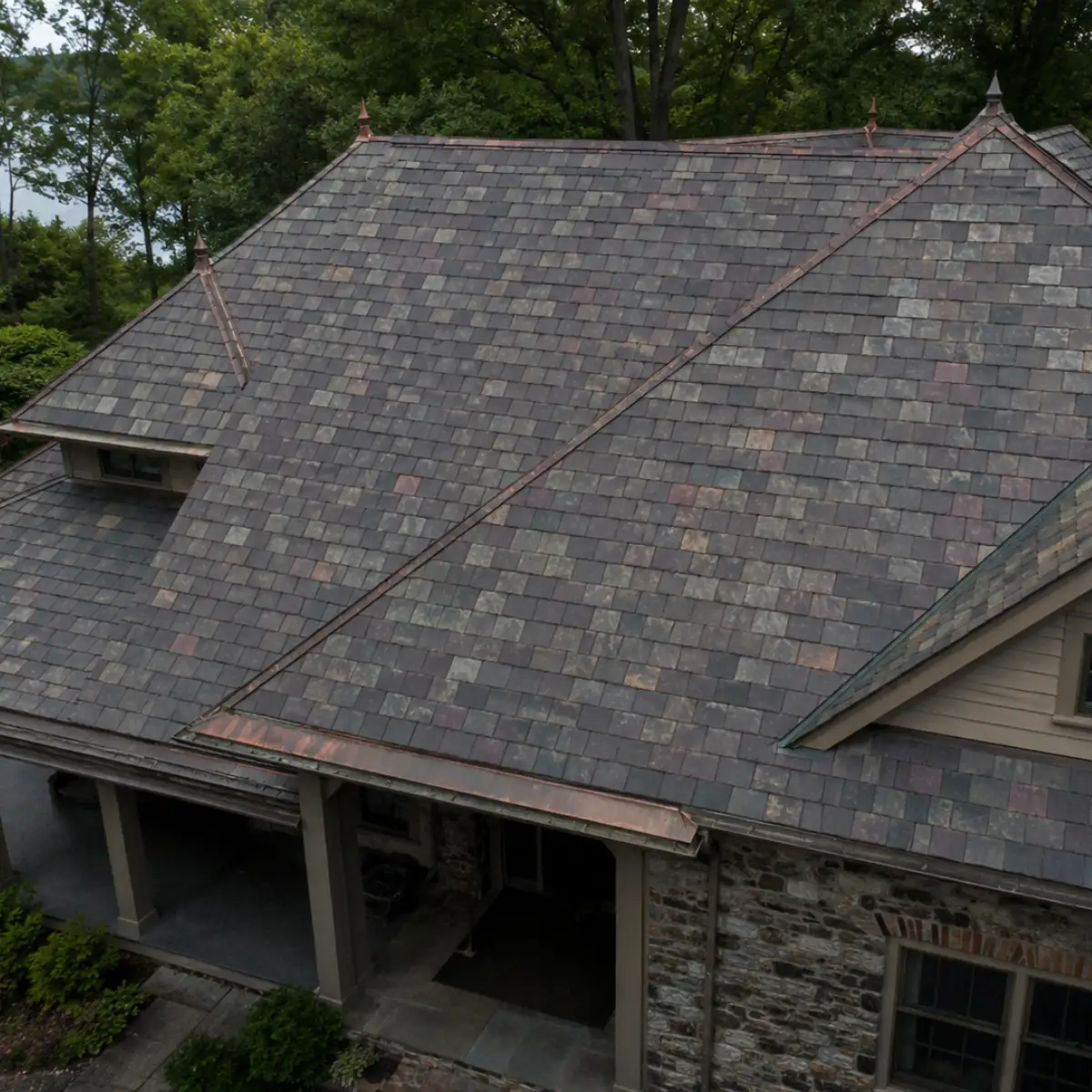
Multicolored Slate Roof
A multicolored slate roof uses a blend of natural slate colors. Depending on the selected material, the mix may include gray, black, green, purple, red, or other natural tones.
This type of roof can become a major design feature. The color blend should be chosen carefully to complement the property’s exterior. A strong slate color choice can add character, but the wrong blend can compete with brick, stone, siding, or trim.
Important Things to Know Before Choosing Slate
Slate roofing has major advantages, but it also comes with important requirements. Before installing or replacing a slate roof, the property needs to be evaluated carefully.
Roof Structure
Slate is heavy. Not every roof structure is built to support it. Before installing slate, we can evaluate whether the structure is suitable for the material. This is one of the most important steps. Installing slate without confirming structural support can create serious problems. The roof must be able to carry the material safely over the long term.
Installation Details
Slate roofing depends heavily on installation quality. Tile spacing, fastening, flashing, underlayment, valleys, ridges, and roof penetrations all need to be handled correctly. Poor installation can shorten the roof’s lifespan and cause leaks, even when the slate itself is high quality. With slate, the workmanship matters as much as the material.
Repair Compatibility
When repairing a slate roof, the replacement slate should match the existing roof as closely as possible. Size, thickness, color, and weathering all affect the finished look and performance. A careless repair can stand out visually or create new water-shedding problems. We take the existing roof into account before making repairs.
Existing Roof Condition
Older slate roofs often need a closer look before any major decision is made. Some may only need limited repair. Others may have hidden problems caused by old flashing, failing fasteners, storm damage, or previous repair work. A full evaluation helps you avoid unnecessary replacement while also identifying situations where repair is no longer the best option.
Slate Roofing FAQs
Can damaged slate tiles be replaced individually?
Yes. Damaged slate tiles can often be replaced individually when the surrounding roof is still in good condition. This is one reason inspection matters. If the damage is limited, targeted repair may be possible without replacing the full roof.
Does slate roofing require regular maintenance?
Yes. Slate roofing should be inspected annually or biannually. Maintenance should focus on cracked tiles, missing slate, loose pieces, flashing, valleys, roof edges, and other areas where water may enter the roof system.
Is slate roofing too heavy for some homes?
Yes. Slate roofing can be too heavy for some homes, especially if the roof was originally built for lighter materials like asphalt shingles. Natural slate weighs several times as much as standard roofing, so the roof framing must be evaluated before installation to confirm it can safely support the added load.
Is slate roofing worth the cost?
Yes. Slate roofing can be worth the cost for property owners who want a long-lasting, premium roof with natural curb appeal. It costs more upfront than many roofing materials, but when installed correctly, slate can provide decades of protection and strong long-term value.
Can a slate roof leak even if the tiles look fine?
Yes. A slate roof can leak even when the tiles look fine. The problem may come from failed flashing, loose or slipped slate, worn fasteners, aging underlayment, damaged valleys, or small gaps around chimneys, vents, and roof transitions where water can enter the roof system.
Should a slate roof be repaired or replaced?
A slate roof should usually be repaired if the damage is limited to isolated tiles, flashing, fasteners, or small leak areas. Replacement may be needed when there is widespread tile failure, repeated leaking, failing underlayment, poor installation, or structural problems.
Schedule Slate Roofing Service with Charlotte’s Best Roofing and Gutters
Slate roofing is a long-term investment, and every decision should start with a proper evaluation. Repair, maintenance, and replacement all require the right approach because slate is different from standard roofing materials.
Charlotte’s Best Roofing and Gutters provides slate roof inspection, repair, maintenance, and replacement services in the Charlotte area. If your slate roof is leaking, damaged, aging, or due for an inspection, our team can evaluate it and clearly explain your options.