Copper Roofing
Premium Copper Roofing for Charlotte Homes
Copper roofing is a premium choice when appearance, durability, and long-term value matter. Copper costs more upfront than common building materials, but it’s built to last decades when installed correctly — making it a long-term investment rather than a recurring expense.
At Charlotte’s Best Roofing and Gutters, we install, repair, replace, maintain, and inspect copper roofs for homeowners, businesses, and property owners across the Charlotte area. Every project begins with a careful review of the roof deck, pitch, drainage, and flashing — the details that determine how a copper roof performs over time.
Copper Roofing Services
Copper roofing demands precise installation and repair. The copper materials themselves are exceptionally durable to the elements, but the roof can still fail if seams, flashing, fasteners, or drainage are installed poorly. That’s why copper should be treated as a specialized roofing system, with even more attention to detail than a metal roof.
Our roofing contractors start by helping property owners understand exactly what their copper roof needs. Some roofs only need targeted repairs, while others need full replacement due to age, storm damage, poor original installation, or repeated leaks.
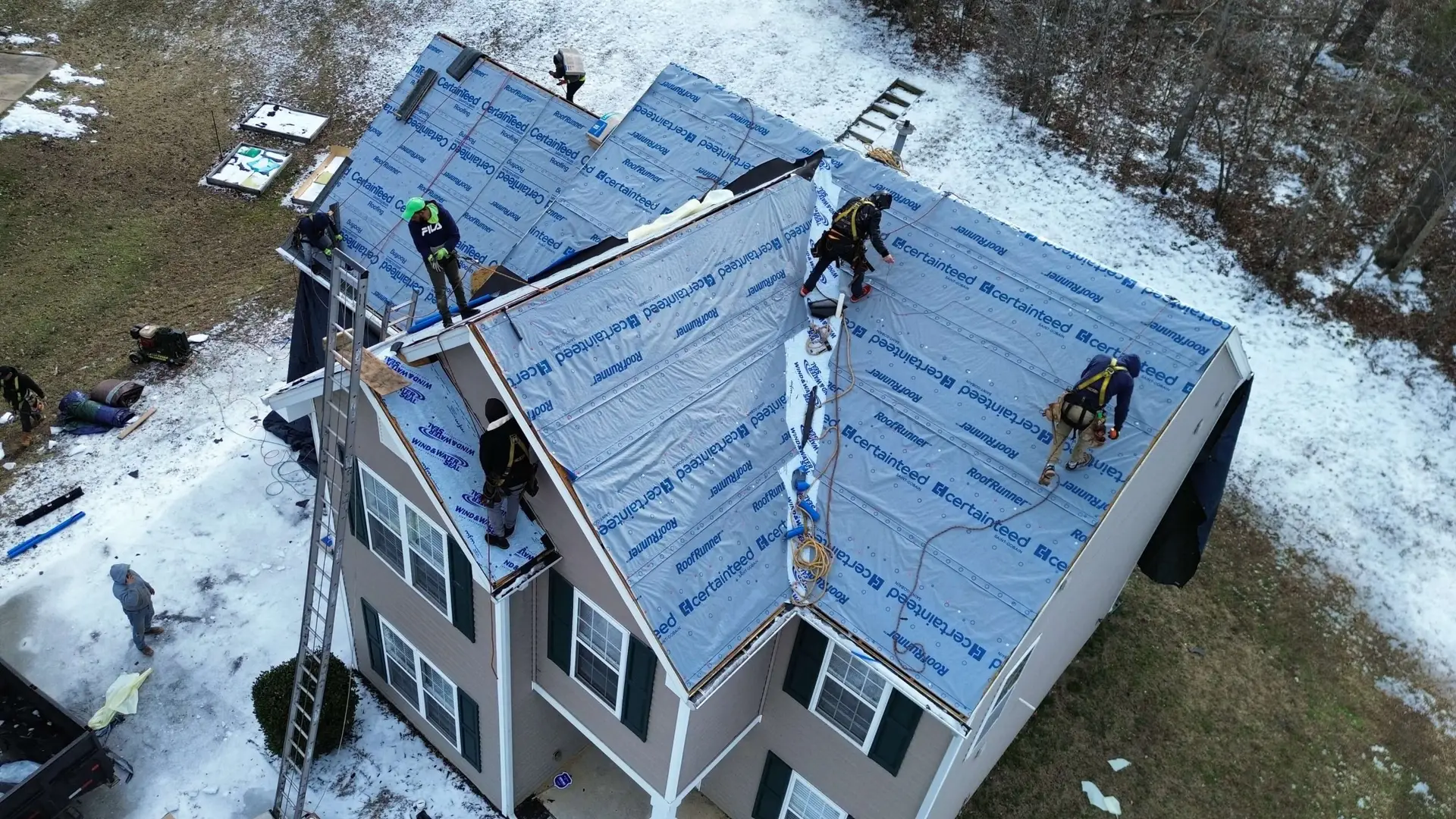
Copper roof installation starts with evaluating the existing roof structure — slope, decking, drainage, and layout. Because copper is typically installed in copper sheets, panels, or custom-formed sections, the system needs room to expand and contract with thermal movement. If the system is too rigid, that movement creates stress points, gaps, or loose sections.
Copper doesn’t have to cover the entire roof, either. It can also be installed on smaller exterior applications like porches, dormers, bay windows, entryways, or accent areas — giving the property the look and durability of copper without the cost of a full copper roof.
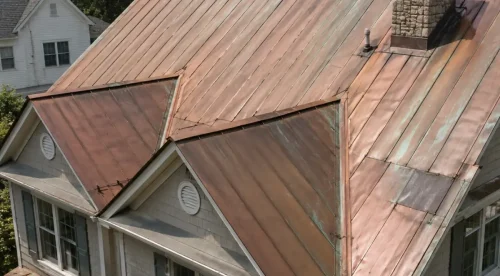
Copper roof repair may be needed when a section starts leaking, loosening, or showing damage. Problems most often appear around seams, flashing, chimneys, walls, valleys, and roof edges — the spots where water has the easiest path inside.
Before any repair is made, the damaged area needs careful inspection. A stain inside the property doesn’t always sit directly under the leak, since water can travel several feet under roofing materials before showing up indoors. Finding the true source is what prevents temporary patches and repeat problems.
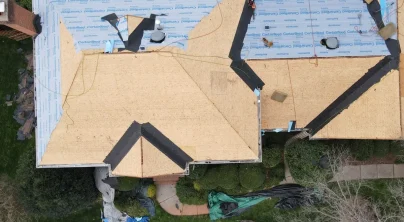
Copper roof replacement is usually the right call when damage is too widespread for repairs to be practical. That includes repeated leaks, loose or failing seams, damaged flashing, or lingering issues from a poor original installation. Replacement is also a great option when upgrading from asphalt roof shingles or aging metal roofing to copper.
Before recommending replacement, we inspect the entire roof system — the roof deck, flashing, drainage areas, and adjacent building materials. A full inspection helps confirm whether the copper roof truly needs to be replaced, or if certain sections can still be saved.
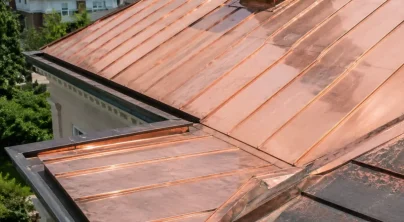
A copper roof inspection is the clearest way to know whether your roof is in good shape or due for work. Inspections are useful before repairs, replacement, or maintenance — and they’re often the first step before a new copper roof installation.
We look at the main areas where copper roofs are most likely to develop problems: seam integrity, flashing transitions, drainage paths, and signs of galvanic corrosion where dissimilar metals meet the copper.
Copper Roof Styles
Copper roofing can be installed in several styles, and the right one depends on the property and the shape of the roof. Style shouldn’t be chosen on appearance alone — slope, drainage, layout, and installation method all factor into what will actually work.
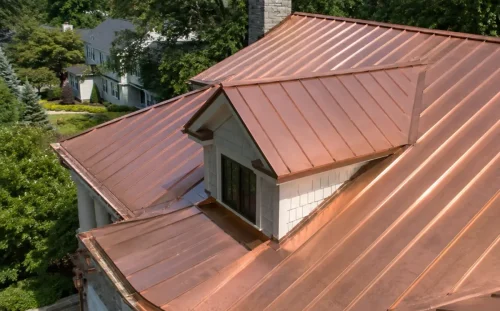
Standing seam copper roofing uses long copper panels with raised seams running between them. The result is a clean, finished appearance that helps direct water cleanly down the roof.
Standing seam works well on homes, commercial buildings, porches, dormers, and accent sections. The panels need to be measured, secured, and seamed correctly — poor installation leads to loose seams, leaks, or thermal movement issues that show up months or years later.
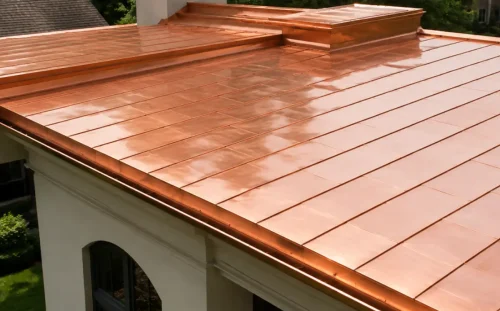
Flat seam roofing uses smaller, soldered copper sheets and works especially well on low-slope roofs, curved surfaces, and decorative sections like domes and turrets.
Batten seam roofing uses raised wooden battens between copper panels, creating a distinctive ribbed look that suits historic and traditional architecture. Both styles deliver the durability of standing seam with a different visual rhythm.
Copper Panel Roofing
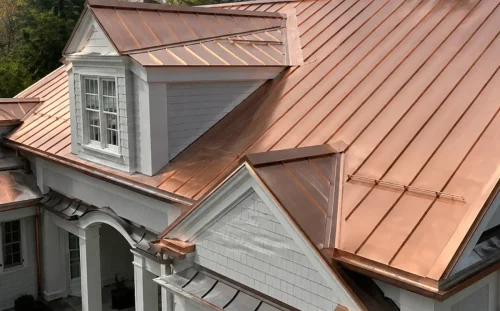
Copper panel roofing uses a larger metal roofing panel format to cover part or all of the roof, creating a smooth, high-end appearance. Because the panels are larger, accurate measuring and fastening are critical. Properly installed copper panels look clean and uniform while still moving water off the roof exactly the way they should.
Copper Roof Shingles
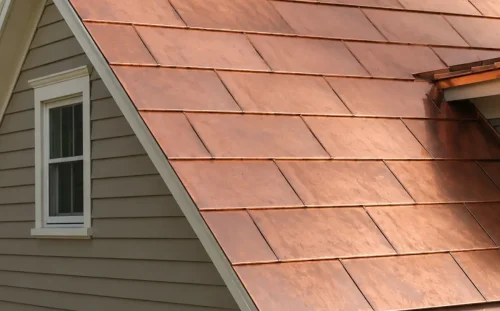
Copper shingles are smaller pieces installed in overlapping rows, creating a more detailed and traditional look. This style is a strong choice for historic-style properties, decorative roof sections, and homes where the owner wants copper with more texture.
Like all copper roofing, the shingles develop a natural patina finish over time — going from bright copper to deep brown, and eventually to the iconic green-blue verdigris.
How Is Copper Roofing Installed?
Copper roofing installation starts with making sure the roof is actually ready for copper. We assess the roof’s condition, choose the right copper style, prepare the surface, and install each component with care.
- Roof inspection and project review: Slope, decking, drainage, and flashing points are checked to confirm copper is a good fit.
- Style selection: We help choose between standing seam, flat seam roofing, batten seam, copper shingles, or copper panels based on roof design and budget.
- Roof deck preparation: The roof deck needs to be solid and even. Copper deserves a sound foundation.
- Building paper and underlayment: A high-quality underlayment or building paper is installed beneath the copper as a secondary moisture barrier.
- Copper material installation: Copper sheets, panels, or shingles are measured, placed, and secured by hand. Where dissimilar metals meet copper, we use proper gasketing material to prevent galvanic corrosion.
- Flashing and transition work: Flashing goes around chimneys, walls, valleys, and roof edges — including building expansion joints where movement needs to be accommodated.
- Drainage and edge review: We confirm water moves off the roof properly, since standing water creates problems even on durable copper.
Final workmanship check: Seams, alignment, fasteners, and drainage details are reviewed one last time. Lightning protection systems, where applicable, are verified.
Clients We Serve
Charlotte’s Best Roofing and Gutters works with residential, commercial, and industrial clients. Our job is to inspect the roof, walk you through the options, and recommend the most practical solution — not the most expensive one.
- Residential — custom homes, luxury homes, and historic-style properties where copper works on the full roof or smaller accent sections.
- Commercial — offices, retail buildings, restaurants, churches, and mixed-use properties where copper’s clean appearance supports curb appeal.
- Industrial — specialty buildings and roof sections where a durable metal system is needed, with attention to drainage demands and rooftop equipment.
Why Choose Copper for Your Roof?
Copper roofing has its pros and cons. However, you should consider choosing it for various reasons including:
Unparalleled Durability and Corrosion Resistance
Copper’s natural corrosion resistance is one of its defining strengths. Most copper alloys used in roofing stand up to rain, sun, humidity, and temperature swings — conditions that wear down most other building materials much faster. Unlike steel or aluminum, copper doesn’t rely on coatings or chemical treatments that wear away over time.
Strong Weather Resistance
Copper holds up exceptionally well in Charlotte’s mix of heat, rain, and humidity. Through a natural weathering process, the surface develops a patina that actually strengthens the roof’s defense as it ages — meaning the roof gets better at protecting itself the longer it’s in place.
Eco-Friendly Roofing Material
Copper is fully recyclable, and most copper roofing contains a high percentage of recycled materials. Combined with a 70+ year lifespan, copper generates far less waste over a property’s lifetime than asphalt or other shorter-lived options.
Timeless Beauty
Copper has a distinctive look that evolves through natural patination. It typically starts bright, deepens into rich browns and grays, and eventually develops the iconic green-blue patina finishes that copper roofs are famous for.
Owners who want the aged look immediately can also opt for pre-patinated copper, which arrives at the job site already weathered. Mechanical surface treatments and chemical coloring are also available for custom finishes, though most homeowners prefer the natural process.
Important Considerations Before Choosing Copper
Copper roofing isn’t right for every property. It costs more than common materials, its appearance changes over time, and it asks more of the roof system that supports it.
- Initial cost — Copper is more expensive than asphalt roof shingles, and skilled installation costs more than standard roofing crews. For property owners who want long-term durability, that investment usually pays off — copper roofs frequently outlast the homeowners who install them.
- Patina aesthetics — If you want your roof color to stay exactly the same year after year, copper isn’t the right material for you. That’s an honest answer worth getting before installation, not after.
- Color consistency — Copper doesn’t always age evenly. Sun exposure, shade, moisture, and roof slope all influence how quickly different sections develop patina finishes.
- Pitch and thermal movement — Copper expands and contracts noticeably with temperature changes. If installation doesn’t accommodate that thermal movement, the system can develop stress points and loose sections.
Copper Roofing FAQs
Is copper roofing environmentally friendly?
Yes. Copper is fully recyclable, made largely from recycled materials, and lasts 70+ years — reducing replacement waste compared to materials that need to be torn off every 20 to 30 years.
How does copper roofing perform in different weather conditions?
Exceptionally well. Copper’s corrosion resistance and natural patina make it one of the most weather-resilient roofing materials available, provided flashing, seams, and drainage are installed correctly.
What is the typical timeline for a copper roof replacement?
Timelines vary based on roof size, design complexity, and the level of custom fabrication needed. Start with an inspection — we’ll need to see the roof in person before giving you a realistic schedule.
How long does a copper roof last?
A properly installed copper roof can easily last 60 to 100 years — and many last well beyond that.
Is copper roofing worth the cost?
For property owners who value long-term durability, premium appearance, and a roof likely to outlast them, copper is genuinely worth the investment.
Does copper roofing turn green?
Yes — that’s the iconic patina you see on historic buildings, church spires, and the Statue of Liberty. The shift takes years and varies based on weather exposure and roof orientation.
Schedule Copper Roofing Service with Charlotte's Best Roofing
Copper roofing is a major investment, which is why the roof should be evaluated carefully before any decision gets made. The material delivers serious long-term value — but only when it genuinely fits the property and is installed by people who understand how to work with it.
Charlotte’s Best Roofing and Gutters provides copper roofing installation, repair, replacement, maintenance, and inspections throughout Charlotte, Ballantyne, SouthPark, Matthews, Mooresville, and Fort Mill, SC.
Whether you’re considering a brand new copper roof or need help with one you already have, our team will inspect the roof, explain your options honestly, and help you make the right call — copper or otherwise.
Ready to start? Schedule your inspection today and we’ll take it from there.